Victorian Auction Reserve Prices: Disclosure Rules Now Apply
Victorian auctions and fixed-date sales from 16 October 2026 fall under new reserve-price disclosure requirements. Here is what buyers can check before updating a budget.
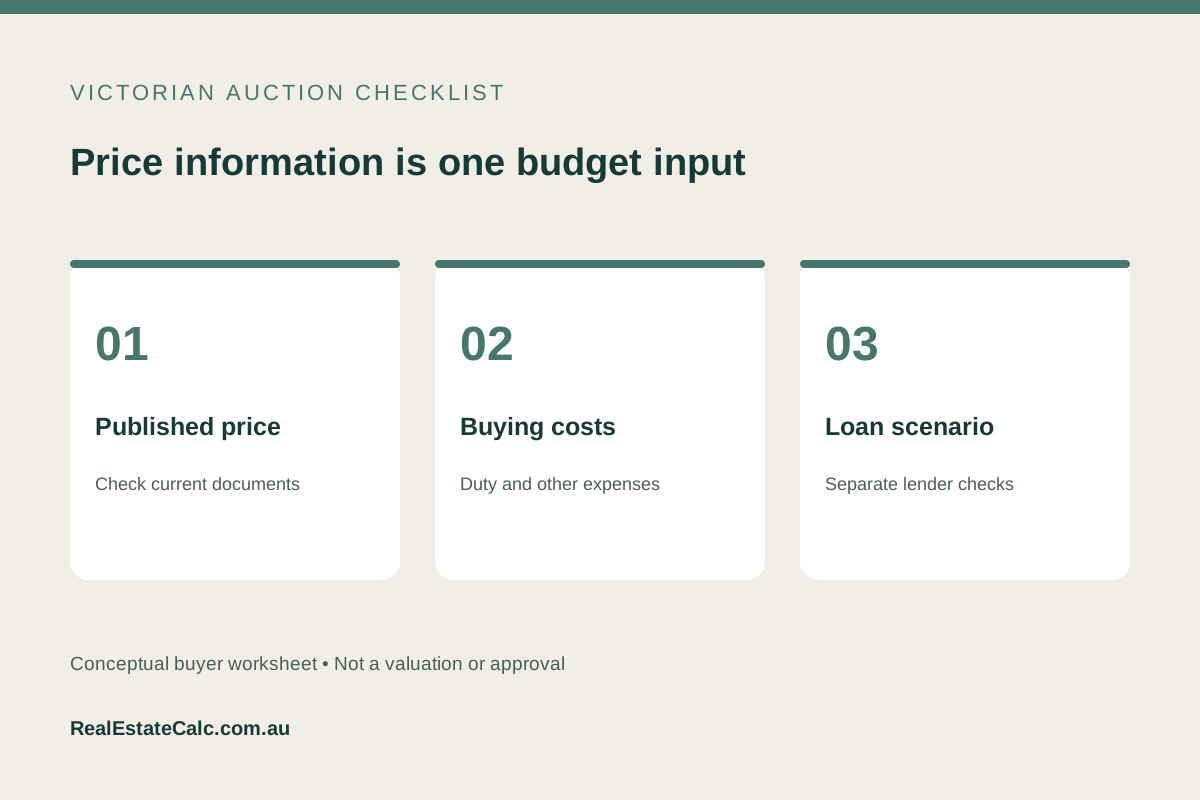
Before you bid
Check your ceiling price and cash needed
Auction traffic is high-intent. These tools help buyers move from market data to a realistic bidding limit.
What changed this week?
Victorian residential auctions and fixed-date sales held on or after 16 October 2026 are now within the application dates for new price-disclosure requirements. Consumer Affairs Victoria says agents must publish the seller's reserve price at least seven days beforehand. The underlying changes started on 1 October.
This is an implementation update, not a new announcement on 18 October. The CAV overview of the changes, updated 2 October, sets out the dates. A published reserve gives buyers another price to examine; it is not a promised sale price, lender valuation or approval to borrow.
What to look for in a listing
CAV's overview also explains that the Property Price Statement replaces the Statement of Information, with information about the property and its comparables. Buyers can look for the current document alongside the advertised price rather than relying on an older saved listing.
Keep a simple record when comparing homes:
| Item | Record | Budget use |
|---|---|---|
| Listing checked | Date and property address | Helps identify an outdated saved price |
| Current price information | Published reserve and current Property Price Statement | A scenario input, not a valuation |
| Scheduled sale | Auction or fixed-date sale date | A prompt to check the current timetable |
| Independent checks | Contract, inspection and lender enquiries still outstanding | Identifies work the price disclosure does not replace |
The CAV industry questions and answers distinguish agent-managed residential auctions and fixed-date sales from commercial sales, private sales without a fixed date and owner-managed sales. Do not extend the reserve-disclosure rule to every Australian property listing.
Sold prices have a separate timetable
CAV says the sold price generally needs to be added to the Property Price Statement within seven days after a sale becomes unconditional, with the statement publicly available for at least 18 months. This requirement applies to sales becoming unconditional from 1 October 2026.
There are exceptions. The industry Q&A identifies an older agent appointment containing a non-disclosure term, as well as an application process for personal or family violence circumstances. A missing published price alone is not enough for this article to determine whether a sale breaches the rules. Check the official guidance or contact CAV about a particular listing.
What changes in a buying-cost estimate?
No calculator formula changes follow from the disclosure rules. A clearer price input may change the scenario a buyer enters, while stamp duty, other costs and lender checks remain separate questions.
For example, compare hypothetical purchase prices of $800,000 and $840,000. The price difference is $40,000. If a hypothetical loan amount stays at $640,000, the purchase-price contribution rises from $160,000 to $200,000, before duty and other costs. That does not establish that a lender would provide $640,000, or that either price is appropriate for the property.
Run both prices through the Property Purchase Cost Calculator with the same buyer settings, then review the individual cost lines. Use the Mortgage Repayment Calculator if the loan scenario also changes. Neither tool verifies an auction contract or sets a safe bid limit.
The auction bidding budget checklist brings the surrounding cash costs and preparation questions together. Sellers comparing professional charges can use the agent commission quote worksheet.
What this update does not establish
It does not show whether the rules have changed auction outcomes, reduced underquoting or affected sale prices. That requires evidence beyond a commencement date. It also does not certify a particular advertisement, resolve a contract question or replace an independent property assessment.
CAV lists further changes for 2027 separately. Those later commencement dates should not be treated as rules already operating in October 2026.
Sources and limitations
Primary sources: CAV overview and industry Q&A linked above, checked 18 October 2026. The table and buying-cost example are original explanations. The example amounts are hypothetical, not market data or a finance offer.
General information only, not financial, legal, tax, credit or investment advice. Check current CAV guidance and obtain qualified advice for a particular sale or contract. Calculator results are indicative estimates, not approvals, valuations or recommendations.
Last updated: 18 October 2026.
RealEstateCalc Editorial
Property & Finance ResearchThe RealEstateCalc editorial team researches and writes about Australian property, finance, and tax topics. All content is fact-checked against official sources including the ATO, state revenue offices, ASIC Moneysmart, and the RBA.
Related Calculators

Property Purchase Cost Calculator
Estimate the total upfront costs of buying property in Australia, including stamp duty, government fees, legal costs, inspections, insurance, and moving expenses.
PropertyMortgage Repayment Calculator
Calculate mortgage payments, total interest, and view an amortisation schedule for your home loan.
FinanceRelated Articles
Auction Bidding Budget Checklist Australia
A practical Australian auction checklist for setting a maximum bid, allowing for stamp duty, loan limits, settlement costs and no-cooling-off risk before auction day.
Compare Agent Commission Quotes at the Same Sale Price
Compare flat and tiered real estate agent quotes using the same sale-price scenarios, GST basis and marketing costs. Includes an original worked comparison and quote checklist.
Ready to try the Property Purchase Cost Calculator?
Use the calculator to model an indicative estimate from the assumptions you enter.
What moved in Australian property this week — in your inbox Sunday.
RBA decisions, clearance rates, policy shifts and the calculators that dropped. Two-minute read, no filler.
Free. No spam. Unsubscribe anytime.